When You Need Ice Delivered Fast, Here’s What You Should Know

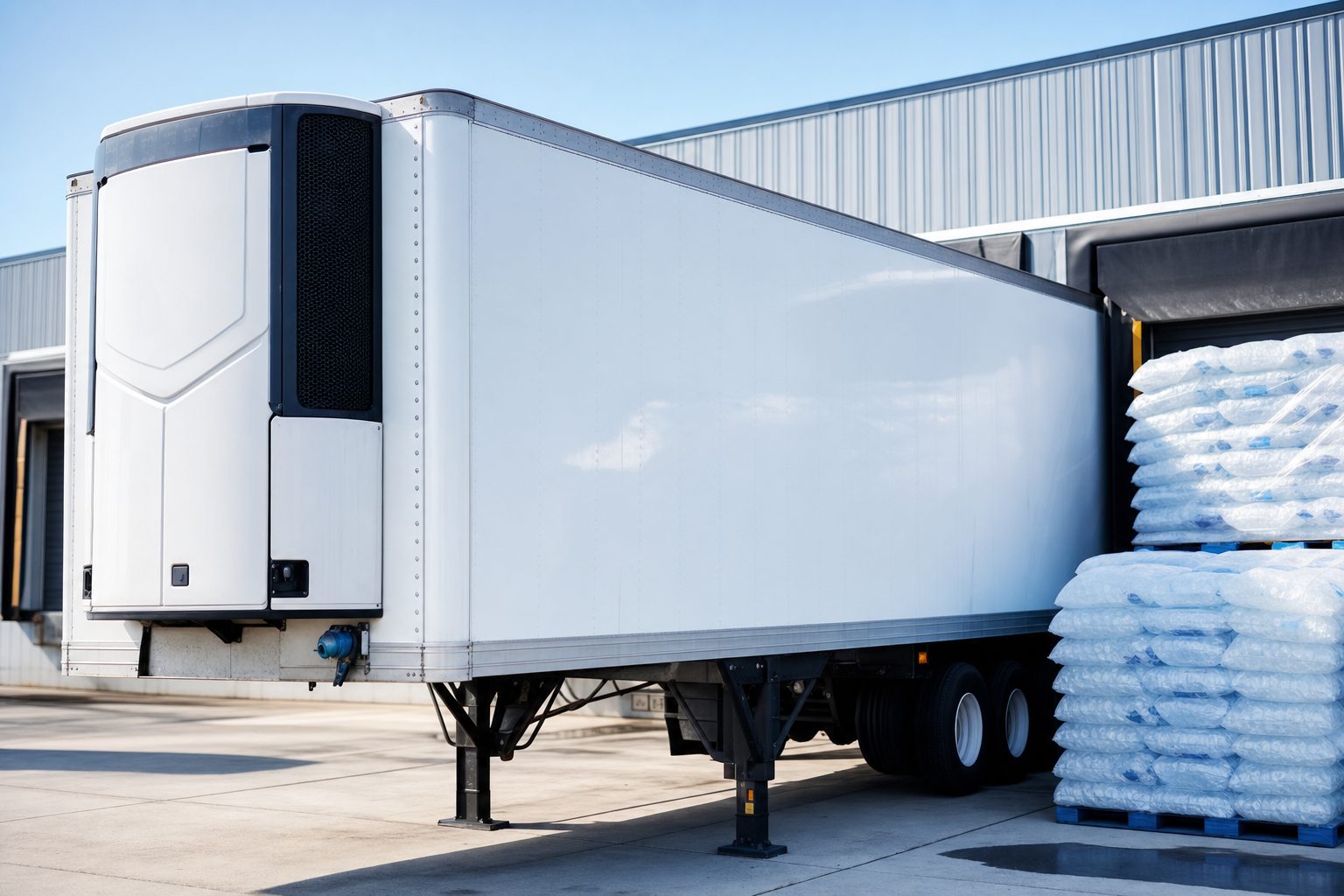
An ice delivery truck is a refrigerated commercial vehicle purpose-built to transport bagged or bulk ice while keeping it frozen from origin to destination. If you need ice delivered fast — whether your ice machine just broke down or you’re prepping for a big event — here’s the short answer:
Quick answer for restaurant managers and event operators:
- Ice delivery trucks maintain sub-freezing internal temperatures to keep ice solid during transit
- They range from compact vans for urban stops to bulk trailers for large events
- Modern trucks use heavy insulation, sealed doors, and standby refrigeration to protect ice quality across multiple stops
- Emergency Ice Delivery can get bagged ice to your door in as little as 45 minutes across our service areas
Running a busy kitchen or event means one thing: you can never run out of ice. When your ice machine goes down mid-service, or a last-minute event order lands on your desk, waiting hours for a delivery isn’t an option.
Modern ice delivery trucks are engineered specifically to solve this problem — keeping ice in good condition from warehouse to your back door, no matter how many stops are in between.
A Quick History of Ice Transport
Before refrigeration was a dial you could turn, ice was harvested from frozen lakes and rivers in winter and shipped globally as a commodity. In 19th-century cities like New York, “icemen” delivered blocks of ice door to door by horse-drawn wagon — a grueling, physically demanding job that gave way to motorized refrigerated trucks over the course of the 20th century.
Today’s ice delivery trucks are a world away from those horse-drawn wagons, but the core job is the same: get ice from point A to point B before it melts.
What Makes a Modern Ice Delivery Truck Work
A modern ice delivery truck is more than a standard freezer on wheels — it’s built specifically to handle the challenges of transporting frozen product over multiple stops.
Key features of a well-built ice delivery truck:
- Heavy insulation — thick, high-performance insulated panels keep the cargo area cold even with frequent door openings
- Sealed, insulated doors — reduce cold-air loss every time the truck stops
- Reliable refrigeration units — quickly recover cold temperatures after doors open and close
- Moisture-resistant, drained interiors — melting ice creates a wet environment, so floors and drains are built to handle runoff without corroding or becoming a slip hazard
Why Cold Chain Integrity Matters
In the ice business, keeping the “cold chain” intact isn’t a buzzword — it’s the difference between delivering clean, usable bagged ice and delivering a fused, unusable block. If the temperature inside a delivery truck rises even slightly, bags of ice can start to sweat; when it drops again, that moisture refreezes and fuses everything into a solid mass that’s useless to a bartender or event coordinator.
To prevent this, well-run fleets keep cargo holds well below freezing throughout the route and pay close attention to air circulation, so cold air reaches every part of the load rather than leaving pockets that warm up.
Common Logistics Challenges
Transporting ice comes with a few recurring challenges:
- Condensation and water runoff — even good insulation can’t fully prevent some condensation, so floor drainage and ventilation matter.
- Air circulation — ice packed too tightly against walls and floors can create warm spots; proper loading keeps air moving around the whole payload.
- Route timing — the longer ice is in transit, the more thermal stress it’s under, so efficient routing and minimizing transit time both matter.
Who Relies on Ice Delivery Trucks
Demand for reliable ice delivery is broad:
- Food service & hospitality — restaurants, bars, and hotels need a steady supply of food-grade ice, especially when a commercial ice machine goes down.
- Event planning — concerts, weddings, and other events need large quantities of ice to keep beverages cold for guests.
- Construction — in hot climates, ice is sometimes used in concrete mixing to help manage curing temperatures.
- Emergency situations — during power outages, ice helps preserve food and medicine until power is restored.
If your ice machine goes down unexpectedly, you don’t have hours to wait around for a fix — that’s exactly the kind of situation rapid on-demand delivery is built for.
Frequently Asked Questions
What temperature should an ice delivery truck maintain?
A well-run ice delivery truck stays well below freezing throughout the trip. Keeping temperatures consistently cold prevents ice from sweating, refreezing, and fusing into unusable blocks.
How do delivery trucks prevent ice from melting on multi-stop routes?
Through a combination of strong insulation, sealed doors that limit cold-air loss, and refrigeration units that recover quickly once doors are closed again.
What industries rely most on commercial ice delivery?
Restaurants, bars, hotels, event venues, and catering companies are the most consistent users, alongside occasional industrial and emergency-response use.
Conclusion
Managing ice logistics well comes down to keeping the cold chain intact from warehouse to your door. At Emergency Ice Delivery, we’ve built our business around fast, reliable on-demand delivery of 20 lb bagged ice — with service available in as little as 45 minutes across our Jacksonville, Charlotte, Columbia, Greenville, and Charleston service areas.
Don’t let a broken ice machine or a sudden rush ruin your service. Order bagged ice right now, explore our full range of services, or contact our team today.