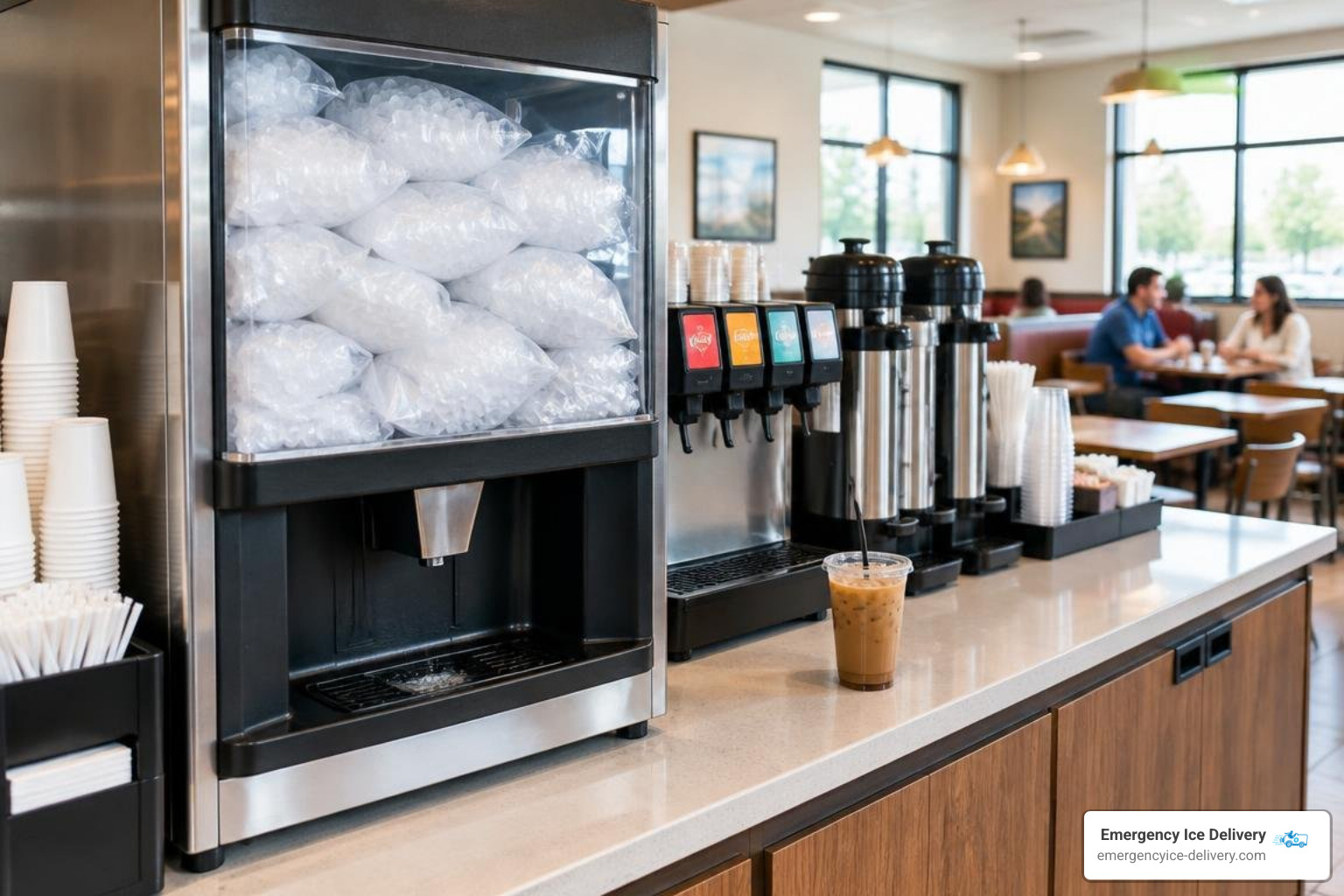
Understanding Bagged Ice Types and Pellet Ice Advantages

Not all ice performs the same way in a glass, display case, or cooler. While standard commercial cubes have been the default option for decades, pellet ice \(frequently celebrated as nugget ice or sonic ice\) has transformed the beverage and hospitality landscape. The secret lies in how it is formed: compacted flaked ice creates a light, porous structure that chills drinks rapidly while absorbing beverage flavors.
When selecting the ideal ice type for your business or gathering, consider melt dynamics, customer experience, and serving speed across different styles:
| Ice Type | Texture & Feel | Chill Speed | Beverage Displacement | Best Applications |
|---|---|---|---|---|
| Pellet \(Nugget\) Ice | Soft, porous, chewable | Extremely rapid | High \(reduces syrup use\) | Specialty cocktails, fountain sodas, raw bars, iced coffee |
| Standard Gourmet Cube | Hard, solid, slow-melting | Moderate | Moderate | Neat spirits, high-end lowballs |
| Half-Dice / Full-Dice | Dense, rigid | Fast to moderate | Standard | General bar wells, mass banquet beverage stations |
| Crushed Ice | Shaved, irregular | Fast | High | Frozen blended bases, juleps, cold seafood platters |
Pellet Ice vs. Standard Cubed Bagged Ice
For bars, cafés, and caterers, chewable pellet ice offers operational and financial advantages. Because pellet ice is less dense than solid blocks or thick cubes, it chills liquid almost instantly upon contact. The compact pellets nestle closely together, creating excellent liquid displacement that helps bartenders and baristas maintain precise pour costs without shortchanging the patron.
From a customer perspective, pellet ice elevates drink quality. Rather than watering down craft sodas or signature cocktails with a harsh melt, the porous structure draws in the liquid, leaving a flavorful, crunchy treat at the bottom of the glass. When deciding on the right format for high-volume service, choosing the right 20 pound ice bags ensures you get the ideal balance of yield, handling ease, and storage efficiency.
Packaging and Durability Specifications
Transporting and storing bulk ice requires durable packaging. Low-quality plastic bags frequently split along bottom seams, exposing ice to freezer burn or external contaminants.
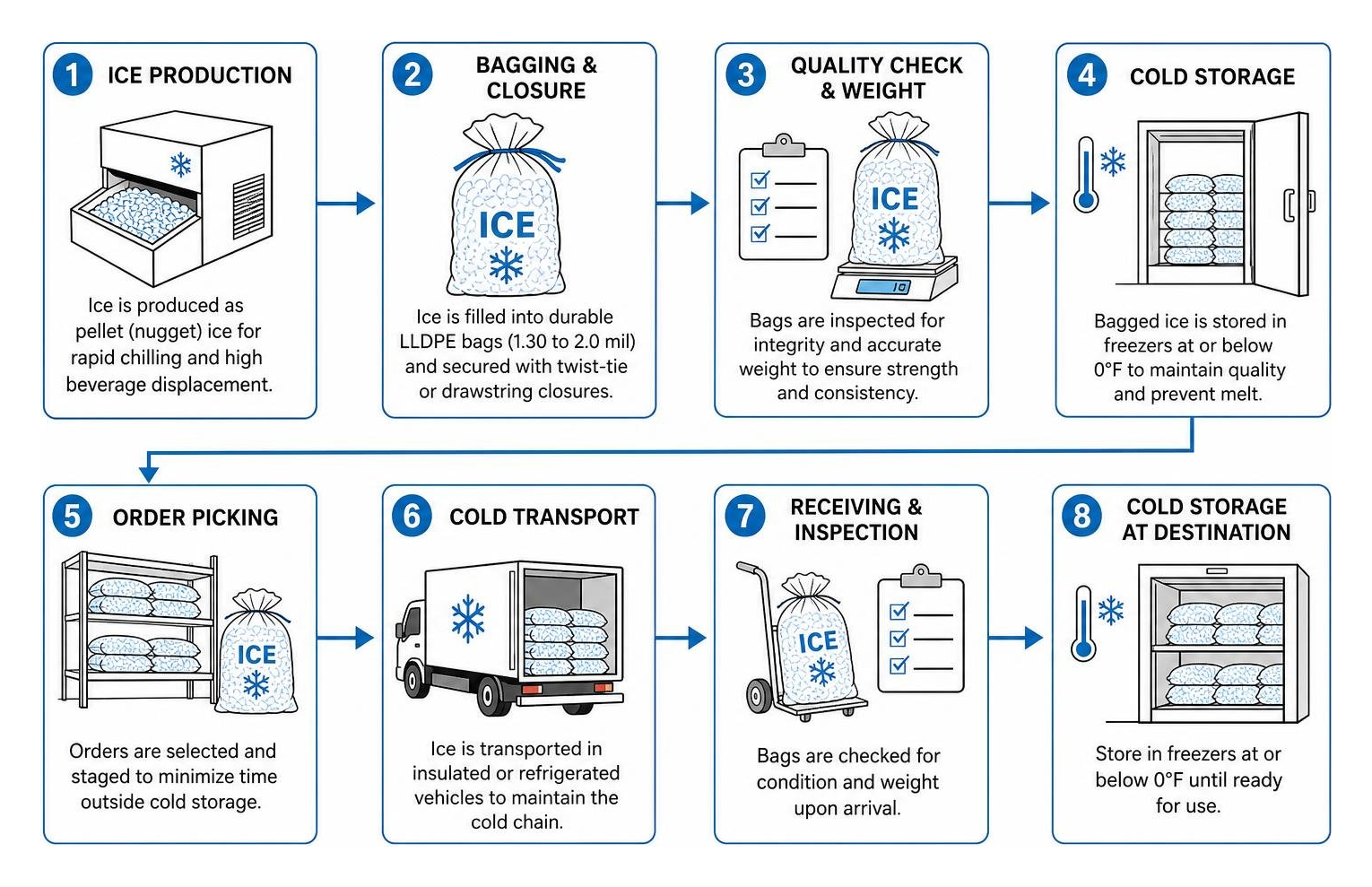
Commercial-grade ice bags rely on heavy-duty linear low-density polyethylene \(LLDPE\) enhanced with metallocene additives. Metallocene significantly bolsters tensile strength and impact resistance in sub-zero temperatures—often rated down to -20°F. For example, commercial packaging options range from standard 1.30-mil to reinforced 2.0-mil thicknesses:
- 1.30 to 1.5-Mil Heavy-Duty Polyethylene: These bags provide reliable puncture resistance for medium-weight distribution, making them a practical choice for 10 lb commercial ice bags used in bar and café service.
- 2.0-Mil Metallocene-Reinforced Bags: Heavy-duty 20 lb commercial ice bags with reinforced seams offer maximum strength to prevent splits when handling bulk weights in walk-in freezers and delivery vehicles.
- Twist-Tie vs. Drawstring Closures: While commercial operations often use twist-tie cases for fast automated packing, drawstring closures double as built-in handles for quick manual transport during busy shifts.
Pricing, Retail Availability, and Bulk Sourcing Options
Ice prices fluctuate depending on bag size, location, and purchase volume. Consumers picking up small quantities at local grocery or convenience stores pay a substantial retail markup per pound compared to businesses that arrange wholesale contracts.
Retail consumers often rely on on-demand delivery apps for emergency ice supplies. However, these platforms add service charges and surge delivery fees that increase the overall price. While app platforms often advertise small grocery discounts, on-demand third-party delivery fees typically start at $3.99 for orders over $35, with additional item markups and pickup fees around $1.99 for non-subscription members.
For businesses operating in Jacksonville, FL, Charlotte, NC, Columbia, SC, Greenville, SC, or Charleston, SC, relying on retail store runs wastes labor hours and vehicle fuel. Establishing a direct line for bulk bagged ice wholesale guarantees predictable pricing per pound and dependable cold-chain handling, while knowing where to buy 20 lb bags of ice protects profit margins during peak seasonal rushes.
Retail Sizes vs. Commercial Wholesale Quantities
Ice bags come in standardized volumes tailored to different operational needs:
- 7 to 10 lb Bags: Common at gas stations and neighborhood markets. These work well for small personal coolers, but restaurant bar wells exhaust them within minutes.
- 16 lb Large Bags: Popular at big-box retailers for consumer demand and larger single-trip event sizes.
- 20 lb Commercial Bags: The industry gold standard for restaurants, catering halls, and hospitality venues. A 20 lb bag optimizes vertical storage in commercial upright freezers and walk-in units while offering the best bulk pricing efficiency.
When planning volume orders, searching for verified large bags of ice near me saves valuable prep time before an event.
Versatile Applications for Modern Ice Supply
Pellet ice serves functional purposes across various hospitality, catering, and display environments.

Catering operations and upscale dining rooms rely on pellet ice for raw bar presentations, oyster displays, and chilled buffet stations. The small, malleable pellets pack tightly around platters and delicate seafood shells, creating an even, protective cold blanket that maintains food-safe temperatures far better than angular ice chunks that leave air pockets.
Practical Uses for Bagged Ice Beyond Cold Beverages
Beyond beverage preparation and buffet displays, quality ice serves essential wellness, medical, and athletic functions:
- Cold Therapy and Swelling Reduction: Cold constricts local blood vessels, decreasing circulation to inflamed areas to relieve swelling from acute sprains, bruises, or post-operative sites. Reusable packs like the CVS Health Multi-Use Ice Bag \(holding up to 3 quarts\) allow users to apply drug-free cold therapy directly to joints.
- Tension Headache Relief: Applying an ice pack to the base of the skull, neck, or temples helps ease muscle contraction and vascular swelling associated with tension headaches.
- Skincare and Cryo-Facials: Gently gliding ice cubes across the face in circular motions for 10 to 15 seconds helps constrict pores, calm acne-related redness, and stimulate micro-circulation.
Planning a Reliable Commercial Ice Supply
Running out of ice during a heatwave or a packed weekend service costs revenue and risks patron dissatisfaction. Ensuring supply continuity requires proactive capacity planning and reliable contingency vendors.
- Calculate Storage Capacity: Audit your walk-in and chest freezer space to know exactly how many 20 lb bags your facility can store without obstructing airflow.
- Sanitization and Equipment Redundancy: Commercial ice makers require routine descaling, water filtration replacements, and condenser maintenance. When on-site machines fail during routine service or power surges, having an emergency bagged delivery plan keeps service running smoothly.
- Peak Demand Buffering: Seasonal holidays, outdoor festivals, and private banquet buyouts require 30% to 50% more ice than typical baseline days.
Delivery Logistics and Rush Dispatch Services
When unexpected volume spikes occur in cities like Charleston, SC or Charlotte, NC, businesses cannot afford multi-hour delivery delays. Reliable logistical dispatch keeps kitchens and cocktail wells fully stocked.
Partnering with dependable services for bagged ice delivery near me provides commercial kitchens with rapid replenishment. Finding the best bagged ice companies restaurants businesses count on ensures direct-to-freezer drop-offs without hidden fuel fees or unexpected supply delays.
Frequently Asked Questions About Commercial Ice
How much ice should I order for a catered event?
Plan for 1.5 to 2 pounds of ice per guest for standard 4-hour events. If the event takes place outdoors during summer months or features blended specialty cocktails and dedicated raw bar displays, increase this calculation to 3 pounds per person to account for ambient melt.
How long does bagged pellet ice last in standard coolers?
In a high-grade, rotomolded cooler kept in the shade, tightly packed pellet ice can remain frozen for 24 to 48 hours. Because pellet ice has more surface area than solid blocks, keeping cooler drainage valves closed \(or draining excess meltwater periodically depending on contents\) and keeping lids latched preserves ice longevity.
What is the most cost-effective way to buy ice in bulk?
Ordering palletized 20 lb commercial bags directly through a dedicated ice delivery distributor offers the lowest cost per pound. Wholesale ordering avoids retail grocery markups and platform delivery surcharges while guaranteeing food-grade, metallocene-bagged purity.
Conclusion: Streamlining Your Pellet Ice Supply
Maintaining a reliable, food-safe ice supply keeps your drinks cold, displays fresh, and operations running without disruption. Whether you are managing a restaurant in Jacksonville, FL, hosting a wedding in Greenville, SC, or running a festival in Columbia, SC, clean pellet ice delivers superior beverage quality and presentation.
We produce and deliver bagged pellet ice in clean, durable 20 lb commercial bags, delivering to your business or venue in as little as 45 minutes with transparent pricing and no hidden surcharges. Our logistics network serves Jacksonville, FL, Charlotte, NC, Columbia, SC, Greenville, SC, and Charleston, SC.
When you need an immediate restock or scheduled commercial deliveries, order bagged ice today to keep your coolers filled and drinks chilled.